Right now, everyday people are struggling to pay the bills, while big tech and gas companies pocket billions. A better energy system is possible – one where everyone can heat their homes, care for loved ones and get where they need. But it needs this government to respond with more than just quick bandaid solutions. We need a new story, and solutions that are as big and bold as the challenges we’re up against.

These 10 Energy Gamechangers are about making it easier for people to power their homes, transport and lives with clean, cheap energy. They’re commonsense solutions to bring down energy bills, while protecting our communities for the long-haul. The best part is these solutions are ready to go now – we just need the political will to make it happen.
10 energy game changers

Share your story

Understanding the energy crisis

Download the summary

What could it look like? Ireland generates all of its own homegrown energy, with cheap, clean solar and wind powering our homes, businesses, and public transport. Profits from renewable energy projects are re-invested in local communities and public services. With a strong energy grid, backed up with battery storage, there’s no need for expensive, imported gas so our bills stay low.

What do we need now? 

1. Invest in more homegrown renewables

2. Ensure local energy benefits local people

Invest in publicly-owned clean energy – to speed up the delivery of renewable projects that will bring down the cost of energy bills. If projects are publicly owned, profits can get reinvested in public infrastructure (more renewable energy, roads, hospitals, and schools) instead of going into the pockets of big international developers.

Support more clean energy – to curb Ireland’s reliance on expensive, imported gas. At the moment, our electricity prices are dictated by the price of gas on the international market, because more than 40% of our electricity is generated using imported gas. The more renewable energy we can make here, the less we have to rely on this expensive gas. 

Enforce guidelines for co-ownership and benefit sharing – so that new renewable energy projects support and re-invest in the communities where they’re based. This could take the form of co-ownership, where the local council owns a stake and receives a portion of profits, or community benefit sharing, where local residents get a discount on electricity or a payment.

Empower Sustainable Energy Communities – and remove the barriers that are preventing local communities from building and owning their own renewable energy projects.

3. Boost battery storage

4. Make sure cheap, clean energy can get where it’s needed

Mandate battery storage for new renewable energy projects – so that cheap, clean energy can be stored up and used later. More battery storage will make our energy grid more stable, reliable, and affordable.

Scrap projects that lock in more imported gas – more battery storage means we’re less reliant on expensive, imported gas. Instead of pouring money into expensive projects like Shannon LNG, the government can invest in battery storage that helps Ireland’s long-term energy security and protects us from the volatile international gas market. 

Connect Ireland up with the North-South Interconnector – so every home across the island can access cheap, clean energy, and we don’t have to waste it. 

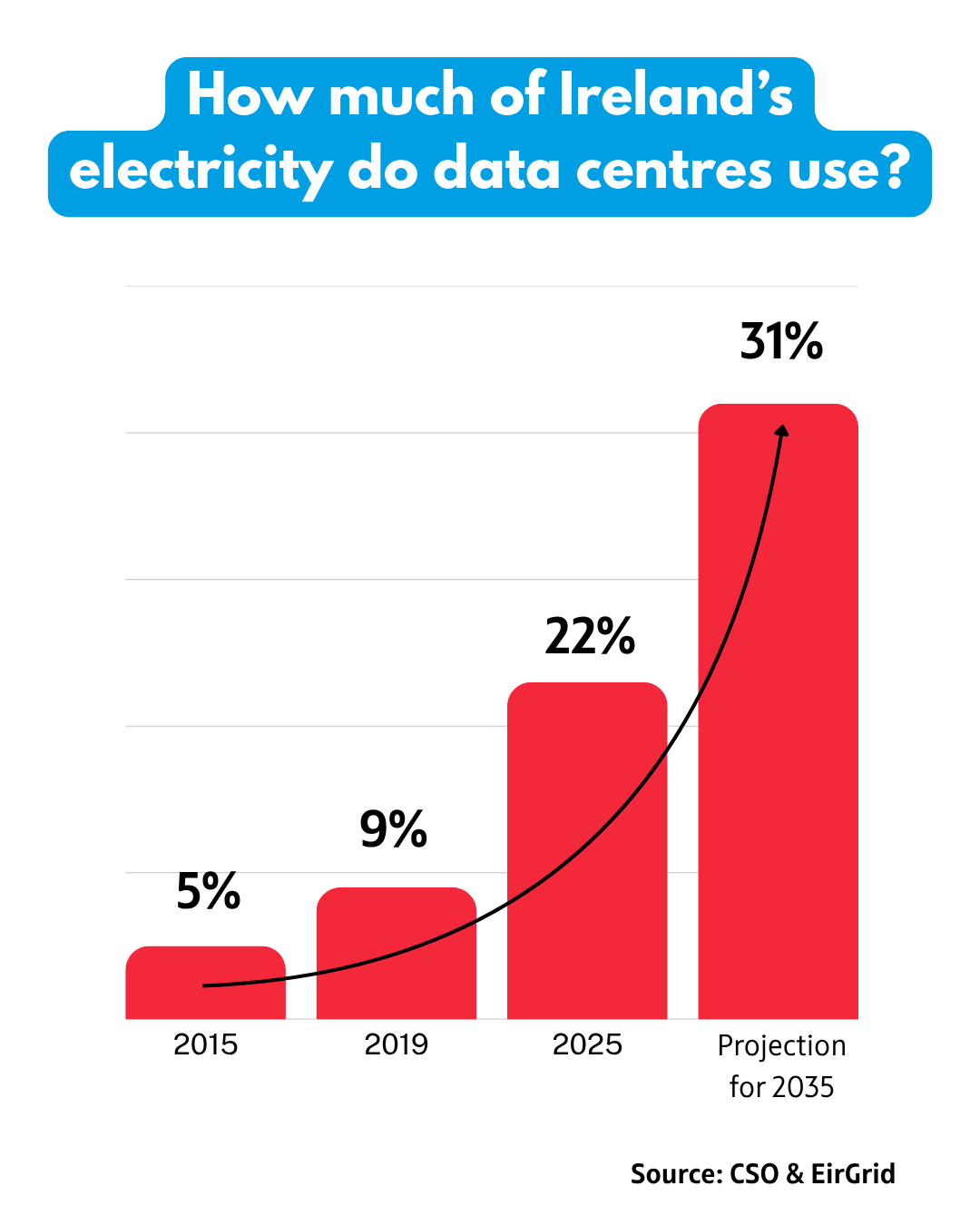
Make big energy users pay their fair share – AI data centres suck up almost a quarter of Ireland’s energy, putting our grid under massive strain. A data centre levy would help pay the cost of upgrading and maintaining the grid, instead of this falling on everyday people.

Establish a forward-looking energy strategy – for better cooperation between our transport, agriculture, home heating and energy sectors. A long-term strategy will help decision-makers understand and prioritise what infrastructure is needed where and when.

What could it look like? An energy system that prioritises clean, cheap energy for people – not big AI data centres. Strict regulations ensure data centres add more renewable energy than they take from the grid. 

What do we need now?

5. Tightly regulate data centre growth

Re-establish a moratorium on new data centres – until the government addresses the harms that data centres are having on our communities, including: increasing our reliance on expensive gas, which is pushing up people’s energy bills; disrupting communities with relentless noise; making it difficult to connect houses to the electricity grid; and sucking up huge amounts of water.

No more energy discounts – data centres shouldn’t be paying less for electricity, while driving up energy bills for the rest of us. 

Scrap the Private Wires legislation – to stop big tech billionaires getting priority access to clean, cheap energy instead of this going to homes.

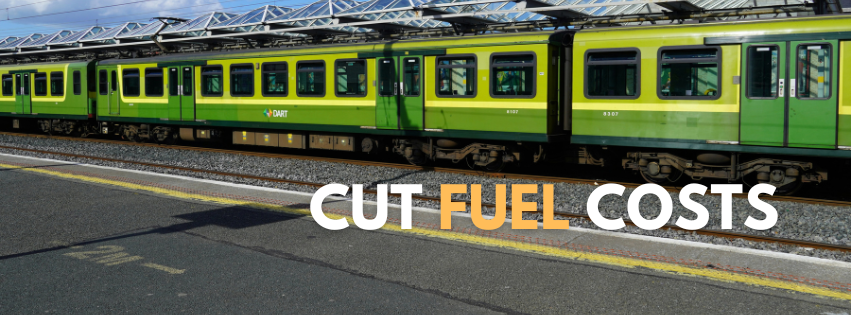
What could it look like? Everyone can get to where they need – in town, and from one end of the country to the other – cheaply, cleanly, and reliably. Workers on the farm, and those who need to travel to the office, are protected from skyrocketing fuel costs.

What do we need now? 

6. Electrify farm machinery

7. Help more people drive electric

Improve supports – to help farmers switch smaller diesel-powered machinery to electric e.g. for mowing, spraying, and light transport. This would help ease reliance on expensive fuel and cut farm running costs. 

Increase subsidies and grants – to make purchasing an electric car (EV) more affordable. Targeting higher grants for lower income households will help more people get onboard. 

Invest in more public EV charging points – to make it easier to travel cheaply from one part of the country to another.  

Extend ICE2EV Scrappage Scheme – to include secondhand EVs. This would help make EV ownership more affordable, allowing people to save money when they scrap a petrol or diesel car older than 13 years, in favour of a new or secondhand EV. 

8. More public transport, more often

Reduce fare prices – to make public transport affordable, and help people reduce how much they need to drive and spend on fuel. Public transport is a cost of living solution. 

Expand bus routes and schedules – to help more people get where they need, without having to use the car. 

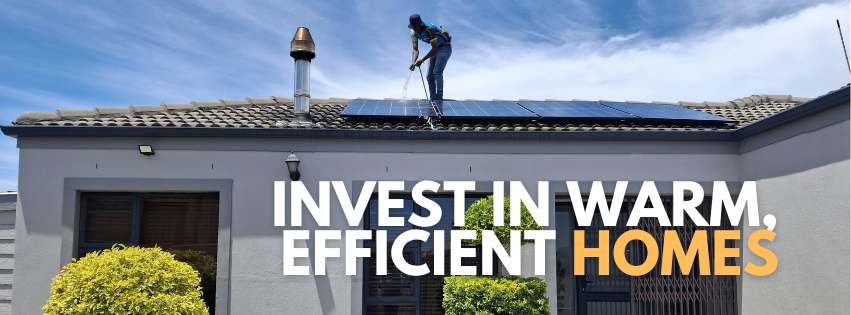
What could it look like? Every person in Ireland can afford to live in a warm, comfortable home – whether they rent, are in social housing, or own their own home. Solar panels and battery storage are helping families take control of their own clean, cheap energy, instead of being at the whim of profiteering energy companies and illegal wars.

What do we need now? 

9. Make it cheaper to heat our homes

10. Solar and batteries for every home

Help more people access grants for retrofitting – that make their homes more efficient and cheaper to heat, such as upgrading insulation and windows. SEAI grants should be given upfront, with a tiered system that provides greater support to those on a lower income. 

Enforce minimum energy standards for rental homes – to push landlords to ensure the homes they rent are efficient, warm, and cheap to run. Make sure renters are also protected in law: retrofits can’t be used as grounds to terminate a lease or increase the rent. 

More subsidies for heat pumps – to help people make the switch from expensive oil and gas heating. Heat pumps are the most energy-efficient heating, but people need greater financial support to take advantage of these benefits. 

Provide free home assessments and advice – to help people understand what home upgrades would help bring down their energy bills, and support them in the process.

Extend grants for solar panels – the government should be helping more people get solar, not rolling back grants. 

Boost the roll-out of plug-in solar panels – to help more homes generate their own cheap, clean energy. Plug-in solar panels are much cheaper than regular rooftop panels and don’t usually require planning permission which means more households, including renters, can use them to reduce energy bills. The Irish government needs to speed up legislation to get these onto market asap.

Reinstate grants for household batteries – so more households can make the most out of the clean, cheap energy they generate. 

Lock in a standard, fixed rate for solar tariffs – there’s no reason energy companies should be reducing the amount people get back for providing electricity to the grid, while also raising electricity prices. A fixed rate, consistent across companies, can make sure homes get a fair price for the electricity they generate.

Share your story

How is the energy crisis impacting you? What solutions would help you and your family? Share your thoughts here

Understanding the energy crisis

Why are everyday people struggling to pay our energy bills, while big tech and gas companies pocket billions? Here’s a very quick summary of the tangled web connecting these things together:

  • We have the technology to bring down bills by generating all our own energy here in Ireland, with clean wind, solar and batteries. [1] But successive governments have refused to invest properly in the energy and transport solutions that would make our lives easier and cheaper
  • Instead, we’re stuck relying on dirty imported gas and oil, and a global market that’s vulnerable to price shocks like the US’s illegal bombing of Iran [2] 
  • At the same time, big tech companies are exploiting Ireland’s energy system for their own benefit. Giant AI data centres now suck up a quarter of Ireland’s energy – driving up our energy bills and increasing demand for dirty gas [3]
  • Instead of reigning in data centres, the government is helping them pay less for electricity than households. These massive data centres are being subsidised by you and me [4]
  • The explosive growth of data centres is the reason why US gas corporations are lining up to import even more gas to Ireland, with expensive projects like Shannon LNG. The Irish government wants to use public money to help them do it, instead of helping the thousands of families who can’t pay the bills. [5]
  • These projects would lock us into using more expensive gas for decades longer. It means more profit for gas corporations, but higher bills for us. [6]
  • Without enough public transport or support for electric cars, many of us have no choice but to accept higher fuel costs to get where we need to go [7] 
  • Cutting the carbon tax won’t make a big difference to fuel prices, but it will mean there’s less funding to subsidise people’s heating bills and for grants to help people make their homes cheaper to heat and run [8]